Replacing a roof involves much more than installing a fresh layer of shingles. One of the most important—but often overlooked—parts of the process is inspecting the roof deck beneath the old roofing materials. If the decking has been damaged by moisture, rot, or years of wear, replacing it before new shingles are installed is essential for the long-term performance of your roof.
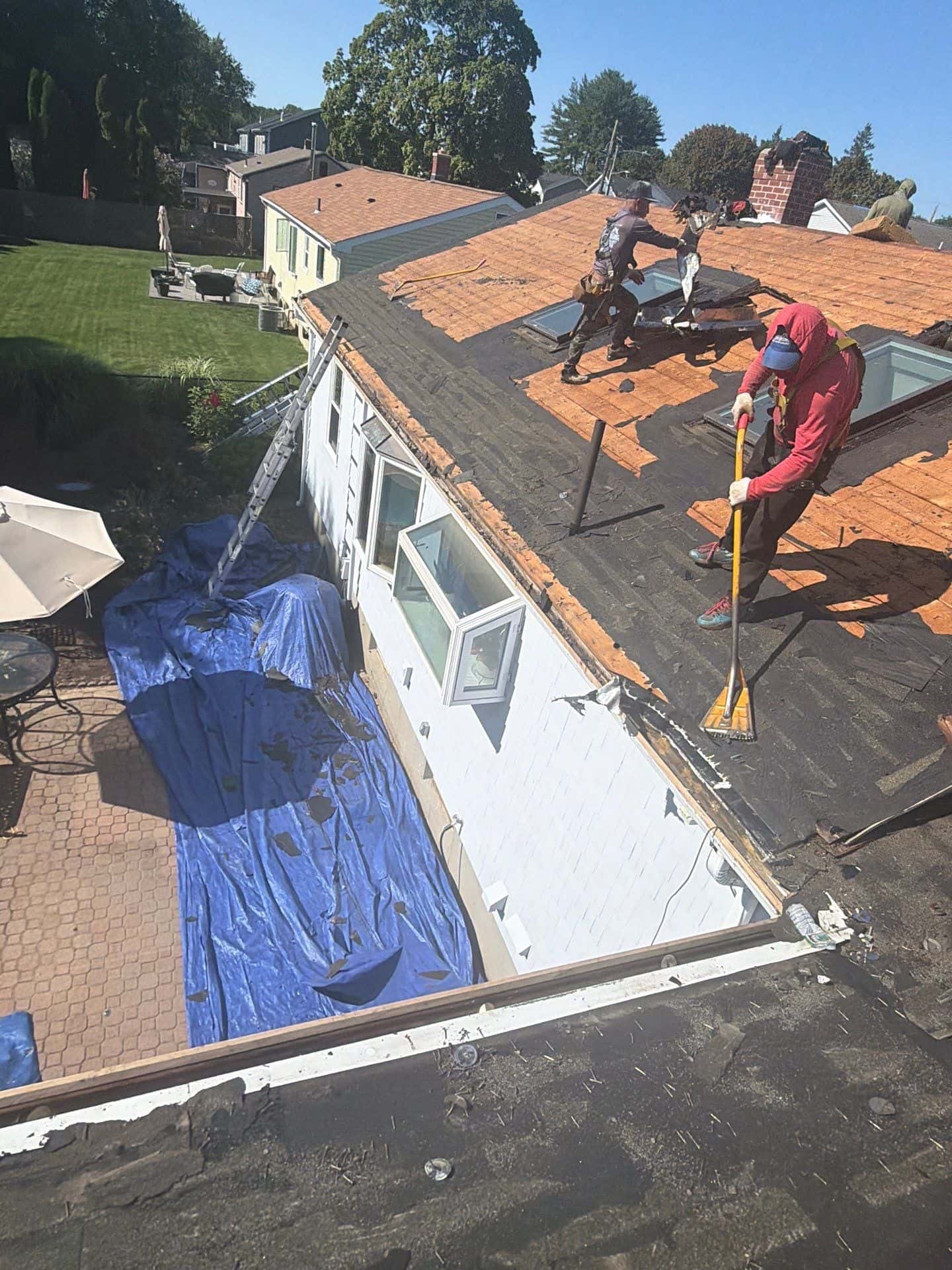
The image above shows a professional roofing crew removing old shingles and exposing the roof deck during a residential reroofing project. This stage allows contractors to identify hidden structural issues before completing a Roof Replacement. Skipping this step can lead to premature roof failure, water leaks, and costly repairs in the future.
What Is Roof Deck Replacement?
The roof deck is the structural surface—typically made from plywood or oriented strand board (OSB)—that is attached to the roof framing. Every layer of the roofing system, including underlayment, flashing, and shingles, relies on this foundation for strength and stability.
During a Roof Inspection, contractors evaluate the condition of the decking after removing the existing roofing materials. If any sections are soft, warped, moldy, or deteriorated, they are removed and replaced before the new roofing system is installed.
A solid roof deck provides proper support for shingles and ensures the roof can withstand wind, rain, snow, and seasonal temperature changes.
Why Roof Deck Replacement Matters Before Installing New Shingles
New shingles are only as reliable as the surface beneath them. Installing shingles over damaged decking may hide structural issues temporarily, but those problems will continue to worsen over time.
Replacing compromised roof decking before installing new shingles offers several important benefits:
- Creates a stable foundation for the roofing system
- Improves nail holding strength
- Helps prevent future leaks
- Increases wind resistance
- Reduces the risk of sagging roof sections
- Extends the lifespan of the new roof
Professional Roofing Repair often reveals hidden damage that homeowners cannot see from the ground. Addressing these issues before installing new shingles protects your investment and reduces the likelihood of unexpected repairs.
Common Causes of Roof Deck Damage
Roof decking is designed to last for many years, but several factors can weaken it over time.
The most common causes include:
- Long-term roof leaks
- Ice dams and trapped moisture
- Poor attic ventilation
- Aging roofing materials
- Improper flashing installation
- Storm damage
- Mold and fungal growth
Water intrusion is the leading cause of roof deck deterioration. Even a small leak can slowly damage the wood beneath the shingles, making replacement necessary during a reroofing project.
How Roofing Professionals Inspect the Roof Deck
Once the old shingles have been removed, contractors carefully inspect every section of the exposed decking.
They look for:
- Soft or spongy areas
- Rotten wood
- Water stains
- Delaminated plywood
- Loose fasteners
- Structural movement
- Mold or mildew
Not every roof requires complete deck replacement. In many cases, only isolated sections need to be replaced while the remaining decking remains structurally sound.
After damaged panels are replaced, contractors install underlayment, flashing, and new shingles to complete the roofing system according to manufacturer specifications.
Why Professional Roof Deck Replacement Is Worth the Investment
Although replacing damaged roof decking adds to the scope of a roofing project, it helps prevent much larger repair costs in the future.
A properly repaired roof deck:
- Supports new shingles securely
- Improves overall roof durability
- Helps protect against moisture intrusion
- Enhances structural integrity
- Maximizes the lifespan of your new roof
Attempting to install shingles over weakened decking may void certain manufacturer warranties and reduce the performance of the roofing system.
At RHODY Ridge Roofing, every Roof Replacement begins with a thorough inspection of the roof deck to ensure homeowners receive a roofing system built on a strong and dependable foundation. Taking the time to replace damaged decking before new shingles are installed helps deliver long-lasting protection, improved performance, and greater peace of mind for years to come.
FAQ
How do I know if my roof deck needs replacement?
Most homeowners cannot determine the condition of their roof deck until the old shingles are removed. A professional roofing contractor will inspect the decking during the roof replacement process and identify any damaged sections.
Can new shingles be installed over damaged roof decking?
It is not recommended. Damaged decking can reduce the strength of the roofing system, lead to leaks, and shorten the lifespan of the new shingles.
Does replacing roof decking increase the life of a new roof?
Yes. A strong, properly repaired roof deck provides a stable base for the roofing system, helping new shingles perform as intended and extending the overall life of the roof.