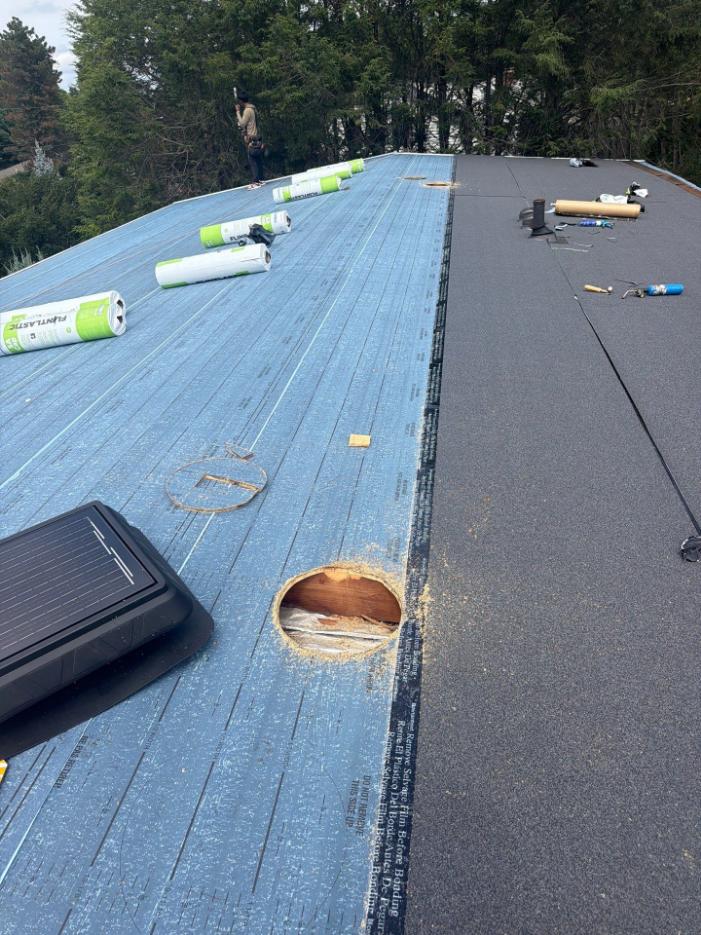
A successful low-slope roofing project begins well before the finished membrane is installed. The image shows a roof in the preparation and installation stage, with a large section covered by a blue roofing material while a darker membrane has already been installed on another portion. Roofing materials, tools, and workers are visible across the surface. This type of project demonstrates why low-slope roof deck preparation is an important part of building a properly organized roofing system. At RHODY Ridge Roofing, careful preparation helps ensure that the roof is ready for the next stage of installation.
Why Low-Slope Roof Deck Preparation Matters
Low-slope roofs have different installation considerations from steep-slope shingle roofs. Because the roof surface has a relatively shallow pitch, water management and proper installation of the roofing layers are particularly important.
Before a new membrane system is installed, the existing roof assembly needs to be assessed and prepared for the selected materials. The preparation stage creates the foundation for the work that follows.
Proper low-slope roof deck preparation can also help contractors identify areas that require additional attention before the finished roofing surface covers them.
What the Image Shows During Roof Preparation
The image captures a roof where different stages of the installation process are visible at the same time. One large section has a blue sheet material covering the roof surface, while a dark finished-looking membrane is visible along the opposite side.
Several rolls of roofing material are positioned across the roof, along with hand tools and installation equipment. This indicates that the crew is actively working through the roof assembly rather than simply performing a surface inspection.
The exposed transition between the two sections also provides a clear view of how roofing work progresses across a low-slope roof.
Inspecting the Roof Surface Before Installation
Before covering the roof with additional materials, contractors need to work with the condition of the existing roof assembly. The preparation process can include examining the visible surface and identifying areas that may need attention.
Any damaged, deteriorated, or unsuitable sections should be addressed according to the requirements of the roofing system and project conditions.
This step is particularly useful because once the new membrane and associated layers are installed, the underlying surface becomes much less accessible.
Preparing the Surface for a New Roofing System
A low-slope roofing system typically consists of multiple components working together rather than a single visible layer. The exact combination depends on the roof design, existing construction, selected membrane, and installation specifications.
The blue material shown in the image appears to be part of the roofing preparation process, while the darker surface represents another portion of the roof system.
Professional Roof Replacement work involves coordinating these layers so that the installation progresses in an organized sequence.
Managing Roof Penetrations and Openings
Roof penetrations require particular attention during preparation. The image includes a circular opening in the roofing surface, demonstrating why areas where equipment, vents, drains, or other components meet the roof need to be incorporated into the installation plan.
These locations cannot simply be treated like an uninterrupted section of roof. The roofing system needs to transition appropriately around the relevant components.
Careful planning around penetrations can help create a more consistent finished roofing assembly.
Material Placement Is Part of the Installation Process
The rolls and tools visible in the image are positioned directly on the roof while the crew works. Roofing materials need to be organized so that installers can efficiently move through each stage of the project.
Material handling is especially important on larger low-slope roofs where multiple sections may be completed progressively.
At RHODY Ridge Roofing, project organization is an important part of professional Roofing Services, from initial preparation through completion.
Preparing Different Roof Sections
The image shows a clear boundary between the blue preparation material and the dark roofing surface. This type of transition can occur as crews move from one section of the roof to another during installation.
Rather than treating the entire roof as one identical surface, contractors can work systematically across individual areas.
This approach helps keep the installation process organized and allows the crew to focus on surface preparation, material placement, and detailing as the project progresses.
Why Low-Slope Roof Projects Need Detailed Planning
Low-slope roofing systems require attention to more than just the visible finished surface. The underlying roof condition, material compatibility, drainage considerations, penetrations, transitions, and installation sequence all contribute to the completed system.
That is why low-slope roof deck preparation deserves attention before the membrane installation is considered complete.
A properly planned project gives contractors an opportunity to address relevant conditions before the final roofing layer covers the working surface.
Choosing the Right Roofing Approach
Not every low-slope roof requires the same materials or installation method. Existing construction, roof condition, building use, drainage design, and project requirements can all influence the appropriate approach.
Home and property owners should discuss these factors with a qualified roofing contractor before selecting a system.
For projects involving membrane roofing, professional Roof Replacement planning can help determine what preparation steps are appropriate for the specific roof.
What Homeowners and Property Owners Should Ask
Property owners can gain a better understanding of a low-slope roofing project by asking several practical questions before work begins.
Ask what condition the existing roof deck is in, which preparation materials will be used, how roof penetrations will be handled, and which membrane system is planned.
It is also useful to ask how the contractor will address transitions between prepared and completed sections of the roof.
These questions help clarify what is happening during the preparation stage shown in the image.
Building the Roof From the Surface Up
The finished membrane may be the most visible part of a low-slope roof, but the quality of the overall system depends on the layers beneath it as well.
The image illustrates this concept clearly: part of the roof has already received a darker surface while another section remains in preparation.
Understanding low-slope roof deck preparation helps property owners recognize why roofing crews spend significant time working on the surface before the final stages are complete.
FAQ
What is low-slope roof deck preparation?
Low-slope roof deck preparation is the process of evaluating and preparing the roof surface before the new roofing system or membrane is installed.
Why is preparation important on a low-slope roof?
Preparation helps contractors work with the existing roof condition, address relevant surface issues, and organize the installation of the new roofing system.
What materials are used during low-slope roof preparation?
The materials vary depending on the roofing system. The image shows sheet-type roofing material and a darker membrane surface, but the exact products cannot be determined from the image alone.
How are roof openings handled during installation?
Roof openings and penetrations need to be incorporated into the roofing system with appropriate detailing based on the specific roof components and installation requirements.
Is every low-slope roof installed the same way?
No. Roofing materials, roof construction, drainage design, existing conditions, and project specifications can vary significantly.
When should a contractor inspect the roof deck?
The roof deck should be evaluated during the preparation process, particularly when existing roofing materials have been removed or areas of the assembly become accessible.
What comes after roof deck preparation?
Once the surface and relevant details are prepared, the crew can continue installing the selected roofing layers and membrane system according to the project specifications.