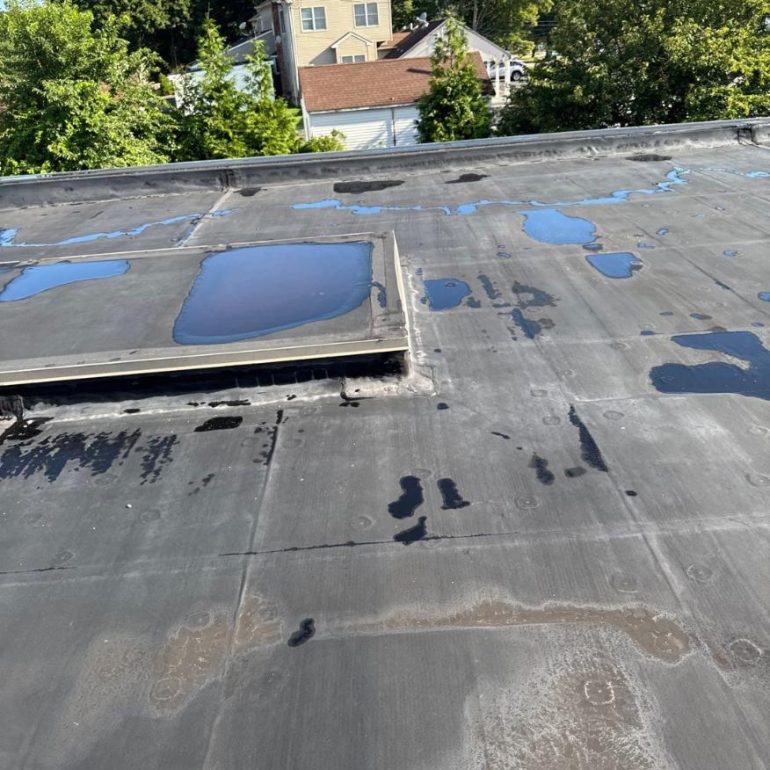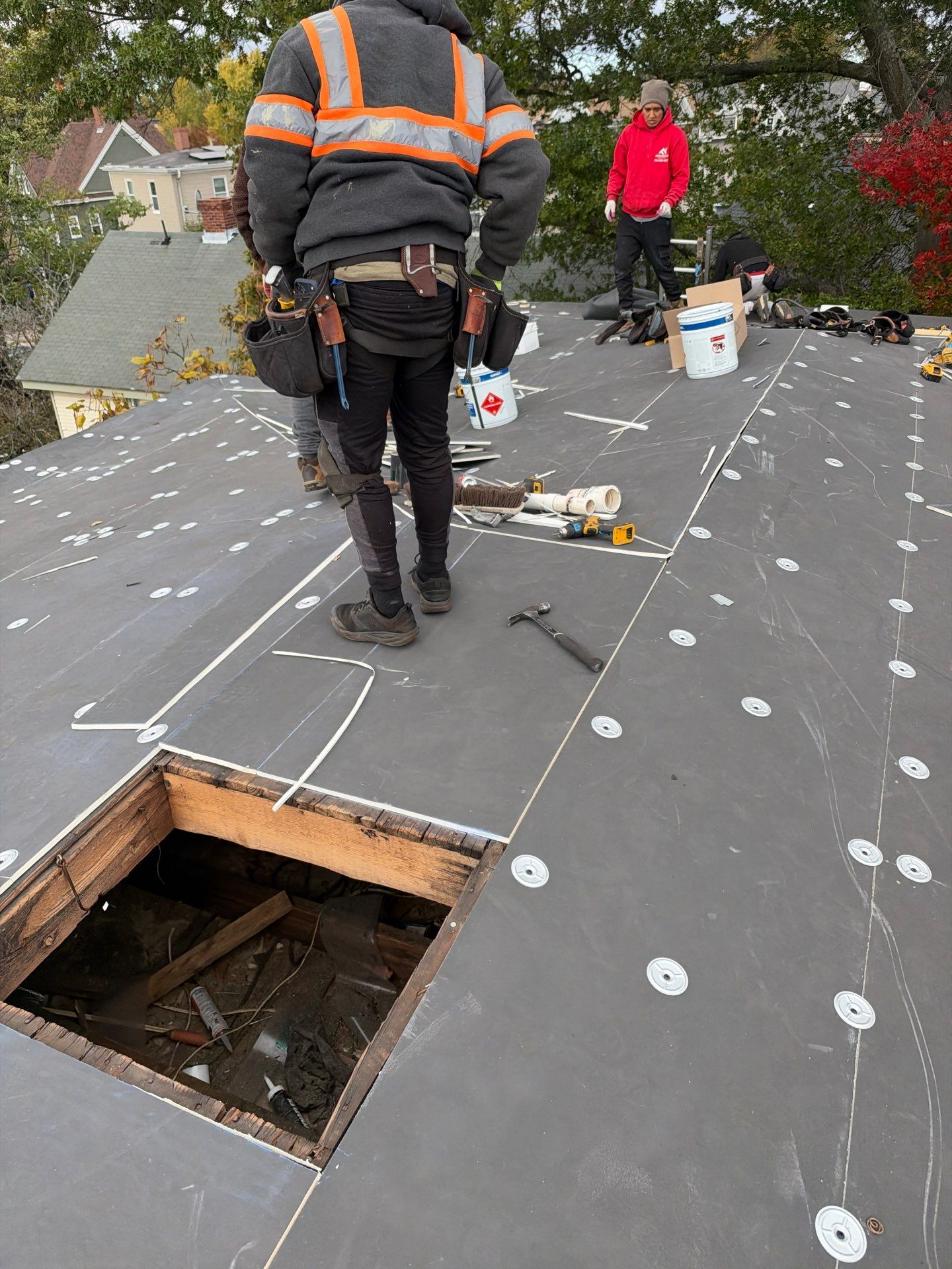
What keeps a flat roofing membrane securely attached to a commercial building? Beyond choosing durable roofing materials, proper attachment is one of the most important parts of a successful installation. Flat roof membrane fastener spacing directly affects how the membrane connects to the roof deck and responds to wind pressure and changing weather conditions.
Mechanically attached roofing systems rely on specialized fasteners and plates to hold the membrane in position. Their placement must account for the roofing material, structural conditions, and the building’s exposure to wind.
Whether installing a new commercial roof or evaluating an existing roofing assembly, understanding the fastening process helps property owners recognize the importance of proper installation.
Why Does Flat Roof Membrane Fastener Spacing Matter?
Fastener spacing determines how the roofing membrane is secured to the underlying roof structure. A properly designed attachment pattern helps maintain the membrane’s position and supports the overall performance of the roofing assembly.
Incorrect fastening can create weak points that affect membrane stability, particularly around roof edges, corners, and seams.
Secure Membrane Attachment
Correctly positioned fasteners and plates help keep the roofing membrane connected to the roof deck.
Wind Uplift Resistance
A suitable attachment pattern helps the roofing assembly resist wind forces according to its design requirements.
Membrane Stability
Proper attachment reduces unwanted membrane movement and supports a consistent roofing surface.
Long-Term Performance
Following approved installation specifications helps reduce the risk of premature attachment-related problems.
4 Major Factors That Determine Roof Membrane Fastener Spacing
Every commercial roofing project has different structural and environmental conditions. The following factors help determine which attachment arrangement is appropriate for a particular flat roofing system.
Roofing Membrane Type
The selected roofing membrane plays a major role in determining the attachment method. TPO, PVC, and EPDM systems can have different installation requirements depending on the manufacturer’s approved specifications.
Important considerations include:
- Fastener compatibility with the selected membrane.
- Attachment plate dimensions and material.
- Membrane sheet overlaps and seam configuration.
- Approved fastening and installation methods.
Using the correct components helps ensure that the attachment system works as intended with the selected roofing assembly.
Roof Deck Material and Condition
The roof deck provides the structural base for the membrane attachment system. Its material, thickness, and condition influence which fasteners can be used.
Common commercial roof deck materials include:
- Wood decking: Fastener selection depends on the deck’s thickness and condition.
- Steel decking: The attachment components must be compatible with the specific steel deck assembly.
- Concrete decking: An appropriate fastening method must be selected for the concrete substrate.
- Other approved substrates: Special attachment requirements may apply.
Inspecting the existing deck before installation helps identify damage, deterioration, or other conditions that could affect secure attachment.
Wind Exposure and Roof Location
Wind pressure can vary across different sections of a commercial roof. Roof corners and perimeter areas may experience different uplift forces compared with the central roof field.
For this reason, the attachment design may include different fastening requirements for:
- Central roof field areas.
- Roof perimeter sections.
- Outside corners and exposed edges.
The appropriate arrangement should be determined using the building’s wind exposure conditions and project-specific wind-uplift design.
Building Height and Roof Configuration
Building height, roof dimensions, structural design, and surrounding exposure can all influence the fastening requirements.
Commercial properties with multiple roof elevations, large open roof areas, or complicated transitions may need additional attention during installation planning.
Evaluating these conditions helps determine an attachment arrangement suitable for the entire roofing assembly.
Critical Areas to Inspect During Membrane Installation
Proper membrane attachment requires attention across the entire roof. However, certain areas deserve additional consideration because of their exposure to environmental forces and potential water intrusion.
Roof Perimeters and Corners
Roof edges and corners may experience increased wind uplift forces. The fastening pattern and perimeter attachment must follow the approved roofing system design to maintain secure membrane connections.
Membrane Seams and Overlaps
Membrane sheets must be correctly aligned and connected according to the manufacturer’s instructions. Poorly prepared seams or incorrect fastening near overlaps can affect the performance of the roofing assembly.
Roof Openings and Penetrations
Skylights, ventilation equipment, pipes, and other roof penetrations require careful membrane integration. Proper flashing and secure transitions help protect these areas against water intrusion.
Common Flat Roof Membrane Installation Problems
Even high-quality roofing materials can experience performance problems when the attachment system is not installed correctly.
- Fasteners positioned outside the approved attachment pattern.
- Incompatible fasteners or attachment plates.
- Loose or improperly secured fastening plates.
- Incorrectly aligned membrane sheets.
- Inadequate attachment around roof edges and corners.
- Poor membrane integration around roof openings.
Identifying these issues during installation can help avoid unnecessary repairs and reduce the possibility of more extensive roofing problems later.
How to Determine the Correct Fastener Spacing
Determining flat roof membrane fastener spacing requires evaluating the complete roofing system. Rather than relying on a general measurement, contractors should consider the following installation steps.
Step 1: Identify the Roofing System
Determine the membrane type and review its approved attachment method.
Step 2: Evaluate the Roof Deck
Check the substrate material, thickness, condition, and fastener compatibility.
Step 3: Review Wind Exposure
Consider building height, roof dimensions, and the required wind-uplift design.
Step 4: Check Manufacturer Specifications
Follow the approved fastening requirements for the selected roofing assembly.
Step 5: Evaluate Roof Zones
Account for attachment requirements across the roof field, perimeter, and corner sections.
Step 6: Verify Installation
Check that fasteners, plates, seams, and transitions are installed according to the approved design.
Manufacturer instructions and project-specific engineering requirements should always determine the final fastening pattern. General recommendations should never replace an approved roofing design.
Why Professional Flat Roof Installation Matters
A mechanically attached roofing membrane is part of a complete roofing assembly. Its performance depends on how well the membrane, fasteners, attachment plates, roof deck, seams, and perimeter components work together.
Professional installation planning helps identify potential problems before they affect the completed roofing system. It also ensures that material selection and attachment methods are evaluated according to the specific requirements of the building.
RHODY Ridge Roofing provides commercial roofing services for property owners seeking dependable roofing solutions. Our team also works with low-slope roofing systems designed for the requirements of different residential and commercial properties.
Protect Your Commercial Roof With Proper Installation
A reliable flat roofing system starts with the right materials, a properly evaluated roof deck, and an attachment pattern suited to the building. Paying attention to fastener placement and installation requirements helps support membrane stability and the overall performance of the roof.
For commercial property owners in Rhode Island, selecting an experienced roofing contractor is an important step toward protecting the building against weather exposure and roofing-related problems.
Need a Roofing Solution for Your Commercial Property?
RHODY Ridge Roofing provides roofing solutions for commercial properties throughout Rhode Island. Explore our services and find the right approach for your roofing project.
Frequently Asked Questions About Flat Roof Membrane Fastener Spacing
What is flat roof membrane fastener spacing?
Flat roof membrane fastener spacing refers to the distance and arrangement between fasteners used to secure a roofing membrane to the underlying roof deck. The correct pattern depends on the membrane system, roof deck, wind exposure, and manufacturer-approved installation requirements.
Is fastener spacing the same across the entire flat roof?
No. The roof field, perimeter, and corner sections may have different attachment requirements because they can experience different wind pressures. The final fastening pattern should follow the project-specific roofing design.
Does membrane type affect fastener placement?
Yes. TPO, PVC, and EPDM roofing systems can have different attachment requirements. Fasteners, plates, membrane overlaps, and installation positions must be compatible with the selected product and its approved specifications.
How does roof deck material affect membrane fastening?
Roof deck material determines which fasteners and attachment methods are appropriate. Wood, steel, and concrete decks have different characteristics, so the substrate must be evaluated before selecting a fastening system.
Why are roof corners and perimeter sections important?
Roof corners and perimeter sections may experience greater wind exposure than some central roof areas. Proper attachment in these locations helps maintain a secure connection between the roofing membrane and the roof structure.
Can incorrect fastener placement cause roof problems?
Yes. Incorrect placement, incompatible components, and loose attachment plates can weaken the membrane attachment system and potentially contribute to premature roofing problems.
How do contractors determine the correct fastener spacing?
Contractors evaluate the membrane type, roof deck material, building height, wind exposure, and manufacturer specifications. The final fastening arrangement follows the approved roofing assembly and project-specific wind-uplift design.
Why should a professional install a flat roof membrane?
Professional installation helps ensure that the roof deck, membrane, fasteners, plates, seams, and perimeter sections are addressed according to the selected roofing system’s requirements. Proper installation planning supports the performance of the complete roofing assembly.