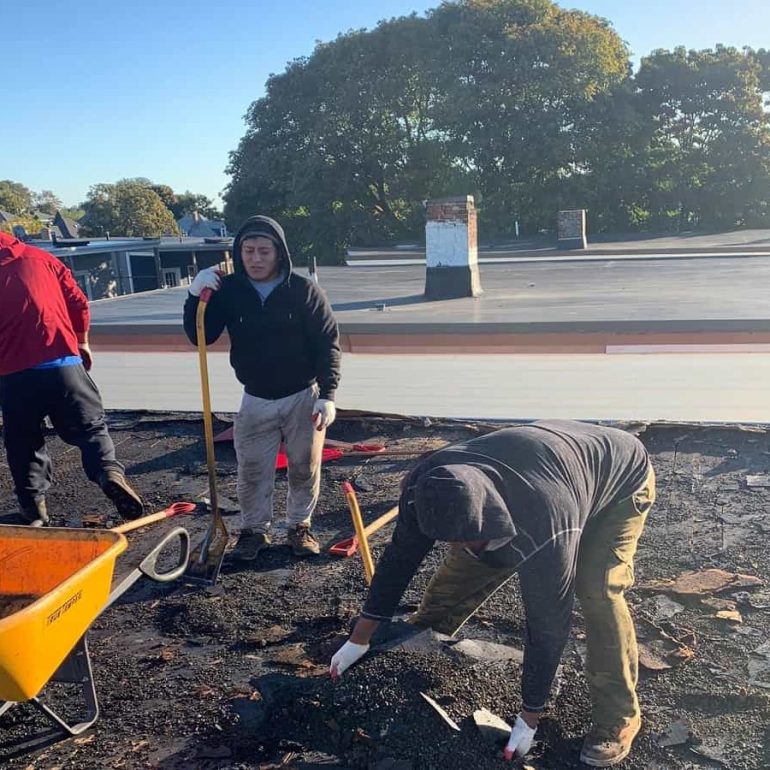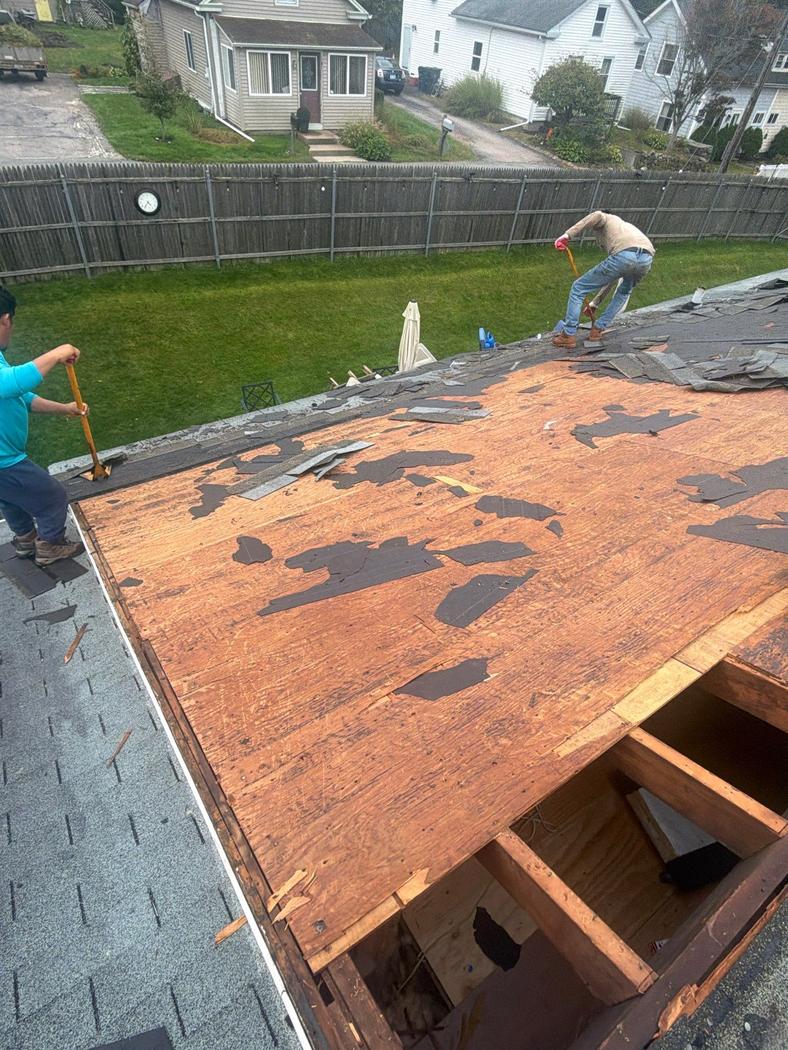
Removing old shingles can reveal conditions that were not visible from the ground. One of the most important findings can be moisture damage in the roof sheathing. Because the sheathing sits below the roof covering, deterioration may remain hidden until the old shingles and related materials are removed.
Why Moisture Damage Can Stay Hidden
Roof leaks do not always create an obvious interior ceiling stain. Water can travel through roofing components and affect the roof deck while the interior appearance remains relatively normal. Small or recurring moisture entry can also affect wood gradually rather than producing a dramatic failure all at once.
That is why the condition of the deck should be evaluated during roof preparation instead of assuming that the existing sheathing is sound simply because the ceiling below looks acceptable.
Signs of Moisture Damage in Roof Sheathing
Contractors may look for staining, discoloration, swelling, delamination, soft wood, deteriorated edges, or other changes that can indicate prolonged moisture exposure. The significance of each condition depends on its location, severity, and cause.
Areas around roof penetrations, valleys, eaves, walls, and flashing details may deserve particular attention because these locations can be more vulnerable to water entry when roofing components have deteriorated or were not performing properly.
What Happens After Damaged Sheathing Is Found
The next step depends on the extent and condition of the affected material. A contractor may recommend localized removal and replacement of compromised sections while leaving sound areas in place. The surrounding wood should also be evaluated so the repair does not stop at a visibly damaged edge while hidden problems remain nearby.
A professional roofing inspection can help document the condition of the roof and determine what requires further attention.
Why the Cause of the Moisture Matters
Replacing damaged wood addresses the affected sheathing, but the source of the moisture also needs consideration. Possible causes can include problems with flashing, roof penetrations, aging roofing materials, drainage conditions, or other parts of the roof assembly.
Understanding the cause helps reduce the risk of repairing the symptom while leaving the underlying pathway for water entry unresolved.
Protecting the New Roof From Repeat Problems
Once unsuitable sheathing has been addressed, the roof can move forward through the appropriate preparation steps for the new roofing system. This may include underlayment, flashing, ventilation components, and the selected roof covering.
The objective is not simply to cover the repaired deck. It is to create a roofing assembly that has been prepared as a complete system.
When a Larger Roof Replacement May Be Appropriate
Localized deck damage does not automatically mean that an entire roof must be replaced. However, extensive deterioration, widespread roofing failure, or multiple problems across the assembly can change the scope of the project.
When replacement is the more suitable option, roofing replacement services can address the old covering, deck preparation, and installation of the new system as one coordinated project.
Keep Roof Preparation Separate From Cosmetic Decisions
Choosing a shingle color or exterior style is important, but it should come after the roof’s structural and weatherproofing needs are understood. The deck, flashing, underlayment, ventilation, and other components form the foundation for the visible roof covering.
For homeowners comparing repair and replacement options, RHODY Ridge Roofing can help evaluate the existing roof and explain the preparation required for the next stage.
Frequently Asked Questions About Roof Sheathing Moisture Damage
Can roof sheathing be damaged even without an interior ceiling leak?
Yes. Water can move within the roof assembly, and some deck deterioration may develop without creating an obvious interior stain.
What does water-damaged roof sheathing look like?
Possible signs include staining, discoloration, swelling, delamination, soft areas, and deteriorated wood. The condition must be evaluated in context to determine whether replacement is needed.
Does damaged roof sheathing always require full roof replacement?
No. Some projects involve localized deck repairs. The proper scope depends on how much of the roofing system and sheathing is affected.
Why should the moisture source be identified?
Replacing damaged wood without addressing the source of the water can leave the roof vulnerable to repeated moisture problems.