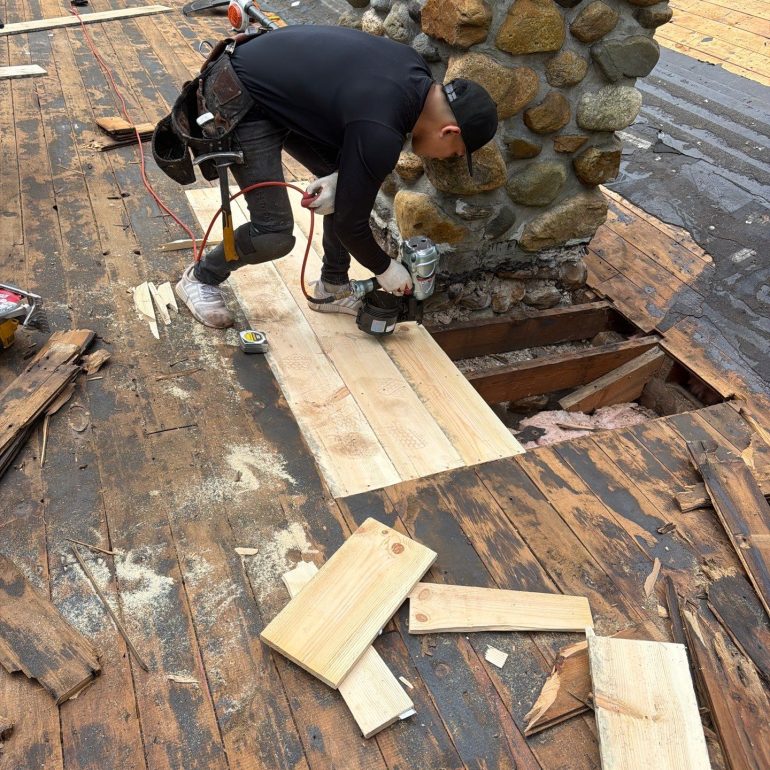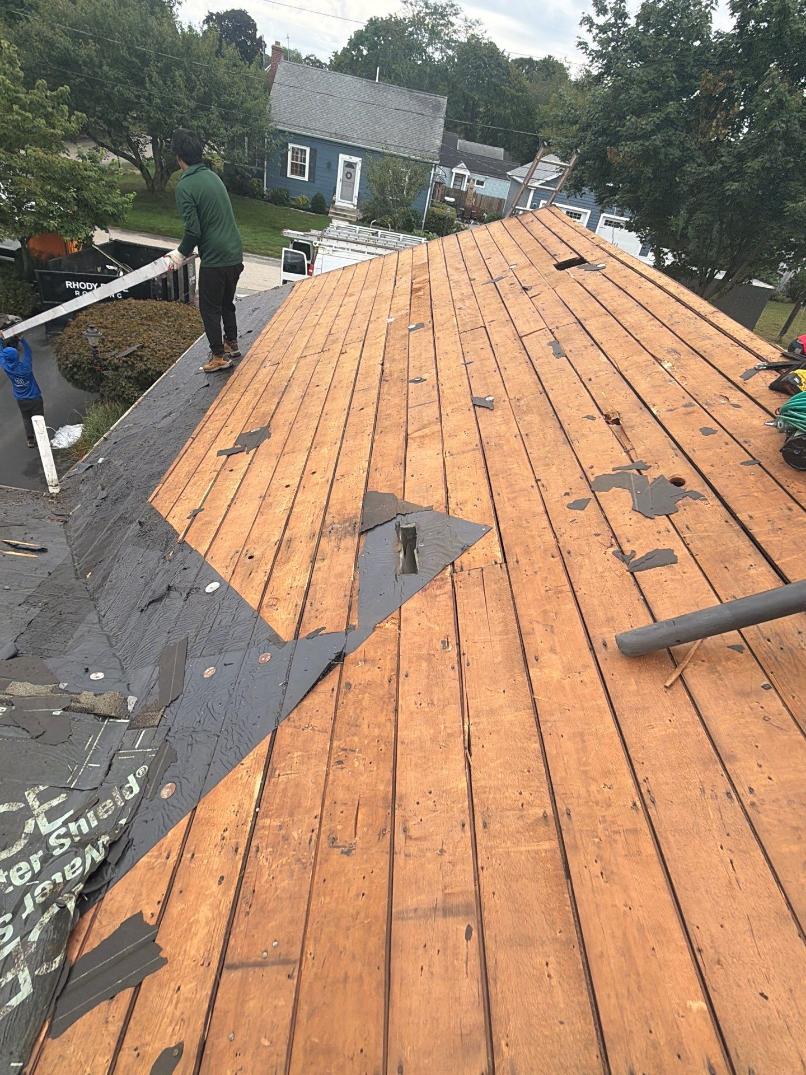
When old roofing materials are removed, the condition of the roof deck becomes much easier to evaluate. The image shows a residential roofing project with the existing shingles and underlayment removed, exposing the plywood decking beneath. This stage is important because the roof deck provides the foundation for the new roofing system. A professional roof deck inspection after tear-off allows contractors to identify areas that may need attention before the next roofing layers are installed. At RHODY Ridge Roofing, evaluating the exposed deck is an important part of understanding the actual condition of a roof during replacement.
Why a Roof Deck Inspection Happens After Tear-Off
Much of the roof deck is hidden when shingles, underlayment, and other roofing materials are installed. A visual inspection from the ground cannot always reveal the condition of the underlying panels.
Once the old roofing system has been removed, contractors can examine the decking directly. This provides a better opportunity to identify visible problems and determine whether the existing surface is suitable for the new roofing installation.
A roof deck inspection after tear-off does not automatically mean that the entire deck needs to be replaced. The goal is to assess the exposed material and determine what work, if any, is appropriate.
What Contractors Look for on Exposed Roof Decking
During an inspection, roofing professionals can look for visible conditions that may affect the installation of the new roofing system.
These may include areas of deterioration, damaged or weakened panels, uneven surfaces, openings around roof penetrations, and sections that appear unsuitable for continued use.
The image provides a clear view of plywood decking across a large portion of the roof. It also shows remnants of the previous roofing system near the edges and around specific areas of the roof.
Careful evaluation helps contractors distinguish between usable decking and areas requiring additional attention.
Why Plywood Condition Matters
Roof decking creates the surface over which the subsequent roofing components are installed. If portions of the decking are compromised, simply covering them with new roofing materials may not address the underlying condition.
During Roof Replacement, contractors can use the tear-off stage to evaluate the deck before installing the new roof system.
The exact material and construction of roof decking can vary between properties. Therefore, the appropriate approach should be based on the actual condition of the roof and the requirements of the replacement system.
Checking Roof Areas Around Valleys and Transitions
Some sections of a roof require particularly careful attention because multiple roof planes or components come together.
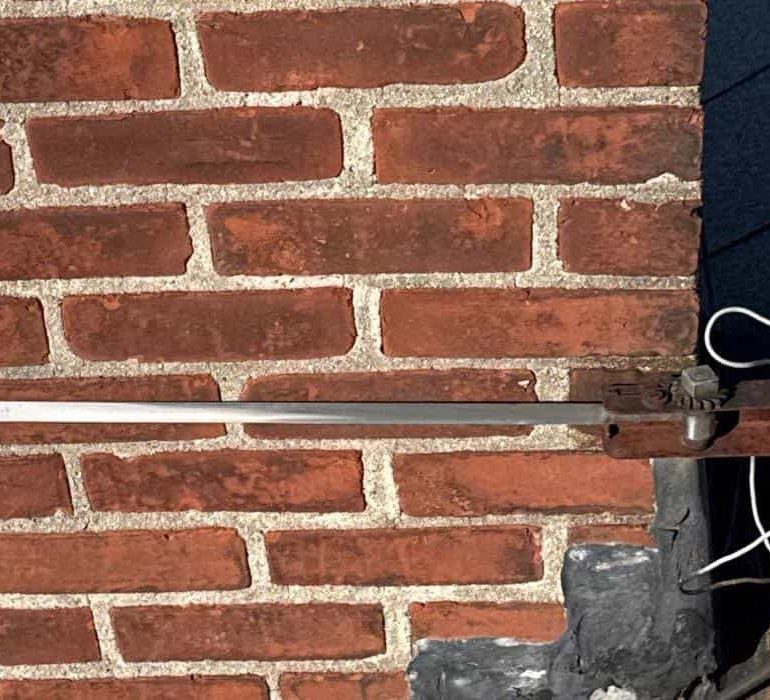
Valleys, roof edges, penetrations, and other transitions can expose different portions of the underlying structure during tear-off. The image shows a large sloped roof where several construction details are visible while work is underway.
These areas should be considered as part of the overall decking evaluation rather than inspected in isolation.
A professional Roof Inspection can help identify conditions that may not have been obvious before the existing roofing materials were removed.
What Happens When Damaged Decking Is Found?
If a contractor identifies decking that is not suitable for the new roofing system, the affected section may need to be addressed before installation continues.
The scope can range from a limited section to a larger area, depending on what is discovered. Contractors should explain which areas require work and the reason for the recommended repair or replacement.
This is one reason why the final scope of a roof replacement can sometimes change after tear-off. Conditions hidden beneath the old roofing materials may only become visible once those materials are removed.
How Deck Preparation Supports the New Roof
A properly prepared deck gives the new roofing system an appropriate base. Once the decking has been evaluated and any necessary work completed, the installation can proceed to the next stages.
Depending on the roofing system, these stages may include underlayment, flashing, ventilation components, and the final roof covering.
The image captures the project before those final exterior layers are installed, making the role of the roof deck particularly easy to see.
Why Homeowners Should Ask About the Roof Deck
Homeowners do not necessarily need to understand every technical detail of roof construction, but asking about the exposed decking can make the replacement process easier to follow.
Useful questions include whether the existing deck appears suitable, whether any sections need replacement, and how the contractor determined the recommended scope.
At RHODY Ridge Roofing, clear communication during the replacement process can help homeowners understand what is visible after tear-off and how those findings affect the next stage of installation.
Roof Deck Inspection and Long-Term Roof Preparation
A new roof involves more than installing new shingles over an existing surface. The condition of the underlying deck is one of the factors that contractors consider while preparing the property for the replacement system.
A careful Roofing Services process can include evaluating the exposed substrate, addressing unsuitable sections, and preparing the surface before the new roofing materials are installed.
The image demonstrates this intermediate stage clearly: the old roofing has been removed, the plywood deck is exposed, and the crew is working directly on the roof structure before the final covering is installed.
When a Professional Evaluation Is Especially Useful
A professional evaluation becomes particularly useful when the condition of the decking cannot be determined before tear-off. Older roofing systems, previous repairs, and areas with a history of moisture exposure can all warrant careful examination once the surface is opened.
Rather than assuming that every roof requires the same amount of decking work, contractors can assess the actual conditions revealed during the project.
For homeowners planning a replacement, understanding the purpose of a roof deck inspection after tear-off can make this part of the construction process much easier to understand.
FAQ
What is a roof deck inspection after tear-off?
It is an evaluation of the exposed roof decking after the existing roofing materials have been removed. Contractors look for visible conditions that could affect the installation of the new roofing system.
Does roof tear-off always reveal damaged decking?
Not necessarily. The condition varies from roof to roof. Tear-off simply provides a better opportunity to directly evaluate areas that were previously covered.
Does all roof decking need to be replaced during a roof replacement?
No. Replacement is generally based on the condition of the existing decking and the requirements of the new roofing system.
Why is roof decking important?
The decking provides the structural surface beneath the roofing layers. The new roofing system needs an appropriate base before underlayment and the finished roof covering are installed.
Can roof decking problems be found before tear-off?
Some signs may be visible before removal, but many conditions are easier to evaluate once the existing roofing materials have been removed and the decking is exposed.
Should homeowners ask to see the roof deck after tear-off?
Discussing the exposed decking with the contractor can help homeowners understand the condition of the roof and any recommended work before the new roofing system is installed.