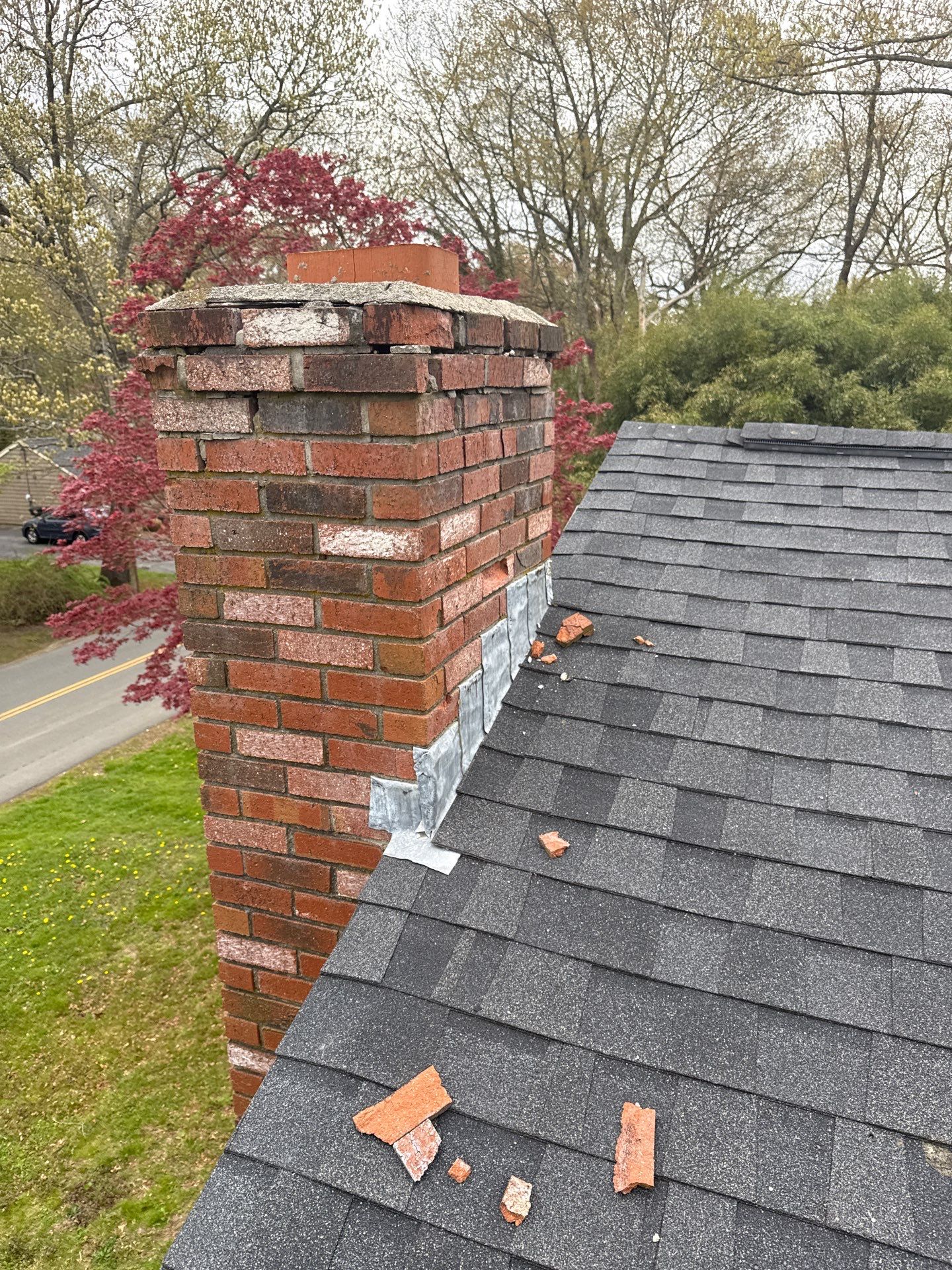
A deteriorating chimney can create much bigger problems than most homeowners realize. When bricks begin cracking, flaking, or breaking apart, the issue is known as spalling. In the image above, pieces of masonry have already fallen onto the roof surface, creating a warning sign that immediate attention may be needed. Professional Spalling Brick Chimney Repair helps prevent roof leaks, structural damage, and costly restoration projects while protecting the overall integrity of your home.
What Is Spalling Brick Chimney Damage?
Spalling occurs when moisture penetrates brick masonry and becomes trapped inside the material. During freeze-thaw cycles, water expands and contracts, gradually weakening the brick surface. Over time, bricks begin cracking, chipping, and breaking apart.
A chimney experiencing advanced deterioration may show:
- Cracked or loose bricks
- Missing mortar joints
- White staining on masonry surfaces
- Pieces of brick falling onto the roof
- Deteriorated chimney crowns
- Water intrusion around flashing
The chimney shown in this image displays several of these warning signs, particularly near the upper courses where masonry failure has already begun.
Why Spalling Brick Chimney Repair Is Important
Ignoring chimney deterioration can lead to significant roofing and structural issues. As bricks continue to break apart, moisture can penetrate deeper into the chimney structure and surrounding roofing components.
Prompt Spalling Brick Chimney Repair helps homeowners avoid:
- Roof leaks
- Damaged roof decking
- Mold growth
- Interior water damage
- Structural chimney instability
- Expensive reconstruction projects
Many homeowners do not realize that chimney deterioration often affects more than the masonry itself. The connection point between the chimney and roof is especially vulnerable when water intrusion develops.
A professional Roof Inspection can identify hidden damage before it spreads throughout the roofing system.
How Chimney Damage Affects Asphalt Shingle Roofs
When brick fragments fall from a chimney, they can impact roofing materials directly. Asphalt shingles are designed to protect a home from moisture, but falling masonry can compromise their effectiveness.
Common roofing problems associated with chimney deterioration include:
- Damaged shingle surfaces
- Loss of protective granules
- Flashing failures
- Water penetration beneath roofing materials
- Premature roof aging
The visible debris on the roof in this image demonstrates how chimney damage can quickly become a roofing concern. Addressing the masonry issue early helps preserve the lifespan of the roof and reduce future repair costs.
This is why many roofing professionals recommend combining chimney evaluations with routine Roof Repair assessments.
Common Causes of Chimney Masonry Deterioration
Several factors contribute to brick chimney failure. Understanding these causes can help homeowners take preventative measures before serious damage develops.
The most common causes include:
- Freeze-thaw weather cycles
- Aging brick materials
- Missing chimney caps
- Damaged chimney crowns
- Poor drainage around masonry
- Long-term water exposure
- Deteriorated mortar joints
Without proper maintenance, even a well-built chimney can eventually develop spalling issues. Regular inspections allow small repairs to be completed before extensive restoration becomes necessary.
Professional Masonry Services can help restore damaged brickwork and improve long-term weather resistance.
When Should You Schedule Chimney Repairs?
Homeowners should schedule an inspection as soon as they notice visible signs of chimney deterioration. Delaying repairs often allows water infiltration to continue, increasing both repair complexity and cost.
You should seek professional evaluation if you notice:
- Loose bricks
- Falling masonry debris
- Cracked chimney crowns
- Missing mortar
- Water stains indoors
- Roof leaks near the chimney
- Visible flashing damage
The sooner repairs are completed, the greater the chance of preserving the existing chimney structure and avoiding major reconstruction.
For homes with aging masonry chimneys, annual inspections remain one of the most effective ways to prevent unexpected roofing and structural problems.
Why Homeowners Trust Professional Chimney and Roofing Inspections
A comprehensive inspection provides a clear understanding of both chimney and roofing conditions. Roofing professionals can identify early signs of masonry deterioration, flashing issues, and water intrusion that may not be visible from the ground.
At RHODY Ridge Roofing, protecting homes from water damage starts with identifying vulnerabilities before they become expensive repairs. Whether the issue involves deteriorating masonry, compromised flashing, or roofing damage caused by falling brick debris, timely repairs help extend the life of the entire roofing system.
FAQ
What is spalling brick chimney repair?
Spalling brick chimney repair involves replacing damaged bricks, repairing mortar joints, addressing moisture intrusion, and restoring chimney components that have deteriorated due to weather exposure.
Can a spalling chimney cause roof leaks?
Yes. A spalling chimney can damage flashing and allow water to penetrate the roofing system, resulting in leaks, wood rot, and interior water damage.
How do I know if my chimney needs repair?
Signs include cracked bricks, missing mortar, white staining, loose masonry, falling brick debris, and visible roof damage around the chimney area.
Is chimney repair covered by homeowners insurance?
Coverage depends on the cause of the damage. Sudden storm-related damage may be covered, while normal wear and deterioration are often considered maintenance issues. Contact your insurance provider for specific policy details.