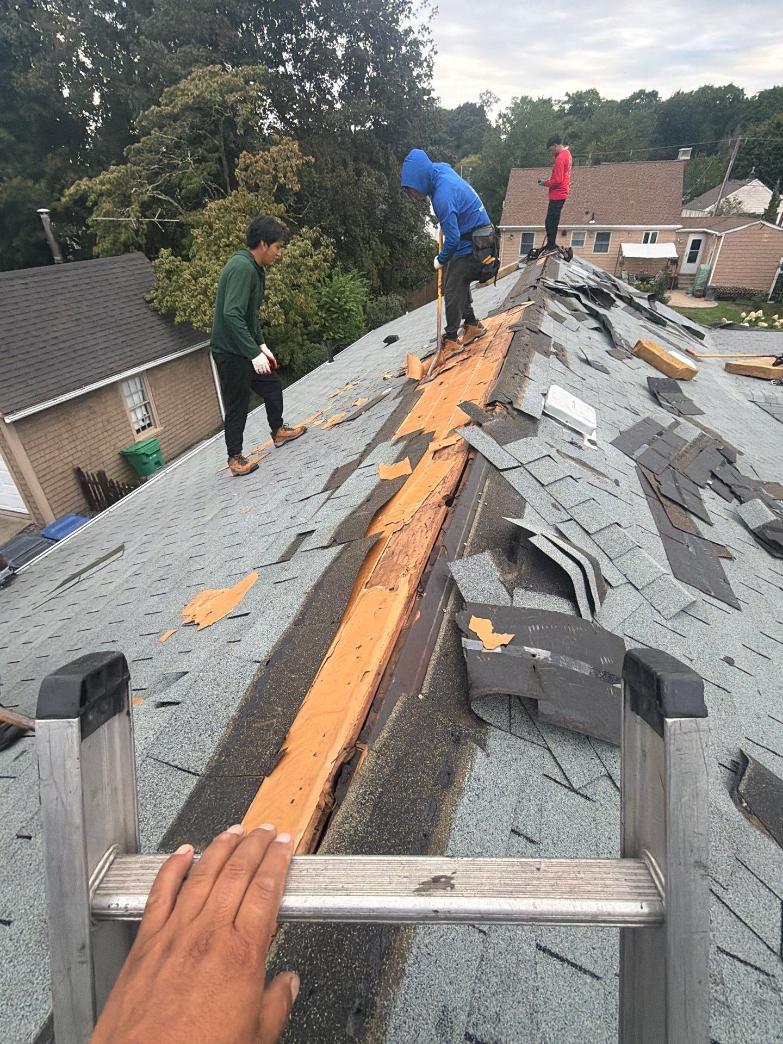
Replacing an asphalt shingle roof involves more than removing old shingles and installing new ones. Certain areas of the roof require careful preparation before the new roofing materials are installed, and the ridge is one of them. The image shows a residential roof during tear-off, with old shingles being removed along the ridge and portions of the underlying roof structure exposed. Understanding roof ridge preparation before new shingles can help homeowners see why this stage is an important part of a properly organized roof replacement project. At RHODY Ridge Roofing, careful preparation helps create a suitable surface for the next stages of installation.
Why Roof Ridge Preparation Matters
The ridge is the uppermost line where sloping sections of a roof meet. Because it represents a transition between roof planes, the area needs to be properly prepared before the finished roofing system is completed.
During a roof replacement, old shingles and associated materials around the ridge are removed so the contractor can work with the underlying roof assembly. The image clearly shows this process, with a long section of the ridge exposed while the surrounding shingles remain partially in place.
Proper roof ridge preparation before new shingles helps the contractor organize the installation from the underlying surface through to the finished ridge treatment.
What Happens During Ridge Tear-Off
The first stage shown in the image is removal of the existing roofing materials. Workers are carefully stripping old shingles from the roof while leaving the underlying surface accessible.
Tear-off can reveal areas that were previously hidden beneath the finished roofing. This gives the roofing crew an opportunity to evaluate the exposed area before continuing with the replacement.
The exact amount of material removed around a ridge depends on the existing roof configuration and the roofing system being installed.
Checking the Exposed Ridge Area
Once the old materials are removed, the exposed ridge area can be evaluated as part of the overall roof preparation process.
Contractors may look at the condition and consistency of the visible roof surface, the transitions between roof sections, and areas where roofing components meet.
This is different from a general roof inspection performed before a project begins. During replacement, the contractor has direct access to areas that were previously covered.
For homeowners, this stage helps explain why some roofing work becomes more visible once the old shingles have been removed.
Preparing for the New Roofing System
After the existing materials have been removed and the roof surface has been prepared, the project can move toward installation of the new roofing components.
Depending on the roof design and selected system, preparation may involve underlayment, ventilation components, flashing, and other materials before the final shingles are installed.
The ridge must be considered as part of this complete roofing assembly rather than as an isolated strip on top of the roof.
A well-coordinated Roof Replacement process accounts for the relationship between the main roof surface and the ridge area.
Ridge Areas and Roof Ventilation
Some residential roofs use ridge ventilation as part of the overall ventilation system. When a ridge area is opened during replacement, the contractor can assess the existing configuration and prepare it for the new roofing system where applicable.
Not every roof uses the same ventilation design. The appropriate approach depends on the property’s existing construction and the roofing system being installed.
This makes professional planning important when completing roof ridge preparation before new shingles, particularly when existing ridge components are being removed during tear-off.
Why Shingle Installation at the Ridge Is Different
The main roof field and the ridge do not use exactly the same installation approach. The ridge represents the point where sloping roof sections come together, so the finishing materials need to transition appropriately.
The image shows the ridge area stripped down while workers continue removing the old shingles from both sides. This provides a clear view of the preparation stage before the finished ridge materials are installed.
The final installation method depends on the roofing product and system selected for the property.
What Homeowners May See During a Roof Replacement
During the tear-off stage, a roof can look significantly different from its finished appearance. Exposed wood, underlayment, removed shingles, tools, and construction debris may all be visible.
The image represents this temporary stage of the process. The roof is not yet finished; instead, the crew is preparing the surface for the subsequent installation.
Homeowners should not judge the final appearance from the tear-off stage alone. The finished roof will include additional roofing layers and ridge components.
Why Professional Preparation Can Make a Difference
Roof replacement involves coordinating multiple components across the entire roof surface. Ridge preparation is one part of that larger process, but it can affect how the uppermost section of the roofing system is completed.
Professional Roofing Services can include tear-off, surface preparation, installation of the new roofing system, and finishing details around roof transitions.
At RHODY Ridge Roofing, paying attention to the roof’s individual sections allows the replacement process to account for the actual configuration visible at the property.
Planning a New Asphalt Shingle Roof
For homeowners considering an asphalt shingle replacement, asking how the contractor will handle the ridge can provide useful information about the project.
Questions can include whether the existing ridge materials will be removed, how the exposed area will be prepared, whether ventilation is part of the existing design, and which ridge components will be installed with the new shingles.
A detailed approach helps homeowners understand that a roof replacement is a sequence of preparation and installation steps rather than simply placing new shingles over an old roof.
Understanding the Ridge Before the Final Installation
The image captures an important but temporary moment in a residential roofing project. Old shingles are being removed, the ridge is exposed, and the crew is preparing the roof for the next stage.
Understanding roof ridge preparation before new shingles gives homeowners a clearer picture of what happens between tear-off and the finished roof.
With proper preparation and a coordinated installation process, the ridge can be incorporated into the overall roofing system rather than treated as an afterthought.
FAQ
What is roof ridge preparation?
Roof ridge preparation is the process of preparing the uppermost section of a sloped roof after existing roofing materials are removed and before the new roofing system is completed.
Why are shingles removed around the roof ridge?
Removing the existing materials provides access to the ridge area so the contractor can prepare it for the new roofing system and its associated components.
Does every roof have the same ridge configuration?
No. Roof designs, ventilation systems, materials, and structural configurations can vary from one property to another.
Is ridge ventilation included with every asphalt shingle roof?
Not necessarily. Ventilation depends on the roof’s design and existing ventilation strategy. A contractor can determine the appropriate configuration for the specific property.
What happens after the ridge is prepared?
The project can continue with the installation of the appropriate roofing layers and finishing components, including the new shingles and ridge materials.
Why should homeowners ask about ridge preparation?
Understanding how the ridge will be handled helps homeowners follow the replacement process and understand what work is being completed before the finished roofing system is installed.